Authorized AMSOIL Dealer
Joseph Feghali
Miami, FL

1982 Dodge Omni 1.7L Oil Type and Capacity

Free Vehicle Maintenance App

For cars, trucks, ATVs & more

Track oil changes, save service records, and get maintenance reminders.

Keep your maintenance history handy for your next service.

Your Vehicle's Information

Year:

1982

Make:

Dodge

Model:

OMNI

Engine Size:

1.7L

Engine #:

[A]

Recommended Synthetic Oil for a 1982 Dodge Omni 1.7L

Product Name Product Description Capacities Product
Signature Series 10W-30 Synthetic Motor Oil Get the best synthetic oil for your Omni now! Save time and money and protect your Dodge. With filter 4 quarts After refill check oil level. ATMQT-EA
Signature Series 10W-30 Synthetic Motor Oil ATMQT-EA
Add To Cart
Add To Cart
XL 10W-30 Synthetic Motor Oil Protect your Omni with Amsoil and support the best MADE in USA oil! With filter 4 quarts After refill check oil level. XLTQT-EA
XL 10W-30 Synthetic Motor Oil XLTQT-EA
Add To Cart
Add To Cart
OE 10W-30 Synthetic Motor Oil AMSOIL OE Synthetic Motor Oil is specially made for the extended oil change intervals recommended for your 1982 Dodge Omni 1.7L engine. It has advanced synthetic technology that resists chemical breakdown for maximum wear protection for your vehicle which is well beyond the traditional 3,000-mile oil change interval. Get the best synthetic oil now for your Dodge Omni. With filter 4 quarts After refill check oil level. OETQT-EA
OE 10W-30 Synthetic Motor Oil OETQT-EA
Add To Cart
Add To Cart

Recommended oil filters for my 1982 Omni

Product Name Product Description Product
AMSOIL Ea Oil Filters Awesome filter for your 1982 Dodge Omni which is recommended for 15,000 miles/one year, whichever comes first, in normal or severe driving conditions. EA15K51-EA
AMSOIL Ea Oil Filters EA15K51-EA
Add To Cart
Add To Cart
WIX Oil Filter Wix oil filters for your 1982 Dodge Omni have extended OEM recommendations which match the drain intervals of AMSOIL XL synthetic motor oil which is 12k or 1 year, whichever is first. 51348-EA
WIX Oil Filter 51348-EA
Add To Cart
Add To Cart

Recommended fuel Filters for my 1982 Omni

Product Name Product Description Product
WIX Fuel Filters Get this Wix fuel filter for your 1982 Dodge Omni and increase fuel efficiency, protect pumps from wear, keep injectors clean and easy to replace design. 33095-EA
WIX Fuel Filters 33095-EA
Add To Cart
Add To Cart

Recommended transmission fluids for my 1982 Omni

Product Name Note Capacities Product Description Product
Signature Series Multi-Vehicle Synthetic Automatic Transmission Fluid Automatic Transmission Fluid
A412 (4-SPD) 3 pints
A460 (4-SPD) 3.8 pints
A525 (5-SPD) 4.4 pints A465 5 speed Also refers to A523, A525 & A543 Transmission for capacity of 2.1liter.
3 speed A670 Total Fill 8.9 quarts 4 quarts Initial Fill
3 speed A404(30TH) Total Fill 7.3 quarts 3 quarts Initial Fill
Amsoil's Signature Series Multi-Vehicle Synthetic automatic transmission fluid is made to blow the doors off any regular or conventional ATF fluids on the market and our oil surpasses the performance needs of most vehicles. Protect your transmission and avoid costly repairs. This fluid has an advanced formula to give awesome top-notch protection under harsh operating conditions. Transmission repairs are expensive so protect your vehicle with this great fluid! ATFPK-EA
Signature Series Multi-Vehicle Synthetic Automatic Transmission Fluid ATFPK-EA
Add To Cart
Add To Cart
OE Multi-Vehicle Synthetic Automatic Transmission Fluid Automatic Transmission Fluid
A412 (4-SPD) 3 pints
A460 (4-SPD) 3.8 pints
A525 (5-SPD) 4.4 pints A465 5 speed Also refers to A523, A525 & A543 Transmission for capacity of 2.1liter.
3 speed A670 Total Fill 8.9 quarts 4 quarts Initial Fill
3 speed A404(30TH) Total Fill 7.3 quarts 3 quarts Initial Fill
Outsanding protection and resists varnish! Change interval based on your Omni's recommendation. OTFQT-EA
OE Multi-Vehicle Synthetic Automatic Transmission Fluid OTFQT-EA
Add To Cart
Add To Cart
Manual Transmission & Transaxle Gear Lube 75W-90 Manual Transmission Fluid
A460 (4-SPD) 3.8 pints
A525 (5-SPD) 4.4 pints A465 5 speed Also refers to A523, A525 & A543 Transmission for capacity of 2.1liter.
This synthetic manual transmission and transaxle gear lube is made to protect from friction and keep viscosity for extended component and fluid life. You will get smooth and fast performance from synchronizers and gears. Enjoy quick and smooth shifting. It is made to exceed protection under severe conditions and it blows the doors off of regular fluids which are limited in protection. Protect your 1982 Dodge Omni. MTGPK-EA
Manual Transmission & Transaxle Gear Lube 75W-90 MTGPK-EA
Add To Cart
Add To Cart

Recommended coolants for my Dodge Omni

Product Name Product Description Capacities Product
Passenger Car & Light Truck Antifreeze & Coolant maximum protection for your 1982 Dodge Omni under extreme temperatures and operating conditions! Lasts up to 150,000 miles or five years! (whichever comes first) ANTPC1G-EA
Passenger Car & Light Truck Antifreeze & Coolant ANTPC1G-EA
Add To Cart
Add To Cart
Low Toxicity Antifreeze and Engine Coolant Lasts in your 1982 Dodge Omni for up to 150,000 miles or five years! (whichever comes first). Biodegradable! ANT1G-EA
Low Toxicity Antifreeze and Engine Coolant ANT1G-EA
Add To Cart
Add To Cart

Maintaining Lubrication Standards for the 1982 Dodge OMNI 1.7L

Proper engine maintenance is a cornerstone of vehicle longevity, particularly when managing an older vehicle like the 1982 Dodge OMNI 1.7L. While many aspects of automotive care involve mechanical repairs or electrical troubleshooting, the consistent management of engine oil remains one of the most effective ways to ensure the internal components continue to operate smoothly.

Monitoring Fluid Integrity and Potential Leaks

A proactive approach to maintenance involves regular visual inspections of the engine bay and the ground beneath the vehicle. For a 1982 Dodge OMNI 1.7L, observing the condition of various seals and gaskets can provide early indicators of where attention might be needed. Rather than assuming specific components are failing, owners should look for any signs of seepage or active fluid loss. When performing routine checks, it is useful to inspect the area around the engine block and the underside of the vehicle. If you notice wetness on the surface of the engine or dark spots forming on your driveway, these can be associated with aging gaskets or seals that may require further investigation. Additionally, checking the level of the lubricant using the dipstick is a fundamental task. Any significant or unexpected change in fluid levels between service intervals warrants an inspection to determine if the lubricant is being consumed or if there is an external leak.

Observing Indicators of Lubrication Issues

While many mechanical issues present themselves through obvious noises, lubrication-related concerns can sometimes be more subtle. It is important to understand that various symptoms may have multiple underlying causes, and a single observation should not be used to diagnose a specific part without further testing. For instance, if you notice an unusual odor while the engine is running, it could indicate that lubricant is contacting a hot surface. Similarly, changes in how the engine sounds during operation or the appearance of any smoke from the exhaust can be indicators that the lubrication system requires attention. If a warning light appears on the dashboard related to oil pressure, this should be treated as an immediate priority for investigation. Monitoring these signs allows for more controlled maintenance decisions rather than reacting to sudden mechanical failures.

Prioritizing Long-Term Engine Care

As vehicles age, the strategy for maintenance often shifts from simple part replacement to a more holistic view of the vehicle's condition. For owners of a 1982 Dodge OMNI 1.7L, establishing a clear baseline of the vehicle's current state is highly beneficial. If service records are incomplete or unavailable, performing a thorough inspection of all fluids and accessible components can help create this baseline. Effective long-term ownership involves distinguishing between necessary preventive maintenance and unnecessary repairs. Instead of replacing parts based solely on the age of the vehicle, focus on the actual condition of the components. For example, if an engine component shows no signs of wear or leakage, it may not require immediate intervention. However, addressing active leaks or investigating unusual fluid consumption should take precedence in your maintenance schedule. Keeping a detailed log of all completed services, including the types of lubricants used and any observed changes in vehicle behavior, will assist in making informed decisions as the vehicle continues to be driven.

Managing Aging Engine Components

Beyond the lubrication system, other parts of the engine compartment may require periodic monitoring due to age. If equipped, accessible drive belts should be inspected for signs of deterioration such as cracking, glazing, or fraying. Similarly, if the vehicle is equipped with various hoses, checking them for softness, brittleness, or bulging can help prevent unexpected failures. Electrical connections and wiring harnesses should also be examined for signs of corrosion or wear. Ensuring that connectors are secure and free from debris helps maintain stable electrical performance. By combining these general inspections with regular oil monitoring, an owner can develop a comprehensive understanding of the vehicle's health, allowing for more predictable and cost-effective maintenance over time.

The Role of Lubricant Quality in Engine Health

Engine oil performs several vital roles that are essential for the continued operation of the 1.7L engine. It acts as a barrier between moving parts to reduce friction, helps manage heat by absorbing thermal energy from internal components, and assists in cleaning the engine by carrying away microscopic debris. Over time, lubricants can become contaminated or lose their ability to maintain their properties due to oxidation and the accumulation of combustion byproducts. Using high-quality lubricants that meet current standards is a way to help mitigate these issues. Some formulations are specifically designed with additives intended for use in aging engines; for example, some high-mileage formulations include seal-conditioning additives that may assist in maintaining the integrity of older seals. While these products can be useful, the most important factor remains matching the lubricant to the specific requirements of the application.

Practical Guidance for Buying Engine Oil for your 1982 Dodge OMNI 1.7L

When it is time to replenish or change the oil in your 1982 Dodge OMNI 1.7L, the most critical step is to ensure the product matches the specific requirements of your engine. Because different engines have unique needs regarding thickness and additive packages, you should not rely on general knowledge or assumptions based on the vehicle's age. To select the correct product, match the engine oil to the application-specific viscosity information already displayed on this webpage. Before making a purchase, always check the product labeling to verify that it meets the necessary quality standards and certifications. Depending on your specific needs and the current condition of your engine, you may choose between conventional, synthetic blend, or full synthetic oils. If you are managing an older engine with higher mileage, you might also consider high-mileage formulations that contain specialized additives. Always prioritize the viscosity and application details provided in the technical specifications above to ensure the best possible care for your 1.7L engine.
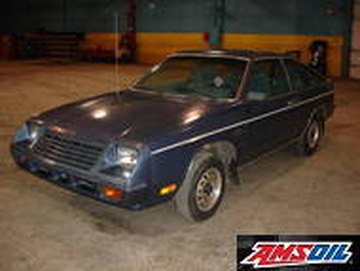
Catalog vehicle photograph for 1982 Dodge OMNI
Vehicle photograph from our catalog. Appearance may differ by model or trim.
Visit us on social media